Space professionals visit schools: ‘Inspiration for the next generation’
Dozens of space industry professionals visited school classes across the Netherlands this week as part of ESERO Education’s ‘Space Goes to School’ initiative. They spoke to pupils and students about their work and the importance of space exploration for the Netherlands and Europe.
‘Who has a question?’ Fifteen hands shoot up. Class 6B at Samenspel primary school in Bijlmer-Oost is curious about the stories of space professional Nadine Duursma, stories about the small satellite she helped build, and about her experiences as an analog astronaut during the European Space Agency (ESA) mission SOLIS100.
Duursma explains the qualities a good astronaut needs: curiosity, technical aptitude, and the ability to work well with others. She has the students try out tasks from the selection process and then experience for themselves what it is like to train as an astronaut. Her key message: ‘In space exploration, you need people with a wide variety of backgrounds and skills.’
Students Jurivienne and Tunaini are delighted with Duursma’s visit. ‘I learned a lot, and she explained things well using great images,’ says Jurivienne. ‘She’s from outside our school, which makes it much more exciting,’ adds Tunaini. That is exactly what teacher Soraya Descartes had in mind when she signed up for the ‘Space Goes to School’ program from ESERO Education: ‘It’s not often that our students get a lesson from a space expert. You can tell they are genuinely interested by the many questions they want to ask.’
A remarkable world
Laura ten Bloemendal from TU Delft visited two schools this week. She addressed eighty pre-university (VWO) students at Maurick College in Vught and visited a mixed Year 5/6 class at the Angelaschool in Boxtel. She took both groups on a whirlwind tour of the Dutch and international space sectors, which support activities such as navigation, communication, astronomy, climate research, and air quality monitoring.
‘I think it is important to show what space means to us, especially to students,’ says Ten Bloemendal. ‘They are the next generation of scientists and engineers who will work in the space sector; they are building our future. That is why I want to get them interested in the world of science and technology right now.’ She also gained a new perspective herself during the talks: ‘I work in the space sector every day. The students’ reactions made me realize just how extraordinary that world actually is.’

Space exploration for education
Jasper Wamsteker, Head of Communication and Education at the Netherlands Space Agency, also swapped his desk in The Hague for the classroom. He visited trainee teaching assistants at Talland College in Purmerend. During the first session, Wamsteker spoke about space and how ESERO Education uses the subject to inspire students. Afterwards, the vocational students got to work themselves: they developed a lesson idea and then pitched it to the group.
‘It was a great exchange,’ said Wamsteker. ‘I could talk about space, since that’s a subject I know something about. But the students could tell me what the education sector needs. I was impressed by their ability to put themselves in the shoes of pupils, teachers, and the classroom situation. They taught me that a lesson needs to be inspiring and fun first and foremost, because that makes it easier for the teacher to convey knowledge.’
Challenge for schools
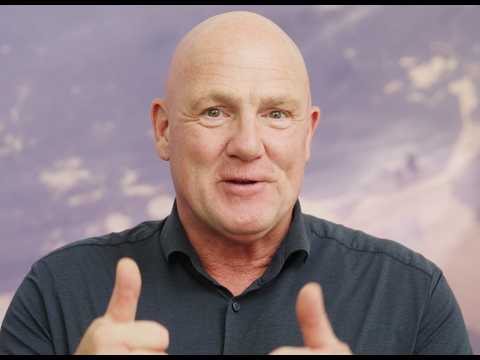
Inspiring students through the subject of space, that is the goal of Space Goes to School and the lessons and activities developed by ESERO Education. Teachers who would like to explore space topics in the classroom can participate in the schools’ challenge this October: “Satellite of the Future,” presented by astronaut André Kuipers.
Watch the video by André Kuipers on YouTube: